




Glutathione: The Antioxidant Your Body Already Makes
Understanding one of the body’s major antioxidant systems and its role in cellular protection.

You’ve probably heard the word antioxidant before.
It’s often used in conversations about nutrition, skin, aging, and wellness. But one of the body’s most important antioxidant systems doesn’t come from a trendy ingredient or supplement.
Your body already makes it.
It’s called glutathione.
Glutathione, often shortened to GSH, is found throughout the body and plays a central role in protecting cells from oxidative stress, supporting redox balance, and helping certain detoxification processes work properly.
So what exactly does glutathione do—and why has it become such a big part of the healthy-aging conversation?
What is glutathione?
Glutathione is a small molecule made from three amino acids:
- cysteine
- glycine
- glutamate
Your cells can produce it themselves.
It is especially abundant inside cells, where it acts as one of the body's major defenses against reactive molecules generated during normal metabolism and exposure to environmental stressors.
Unlike some nutrients that primarily come from food, glutathione is part of an internal antioxidant system your body is constantly making, using, recycling, and regulating.
What does glutathione actually do?
One of glutathione's best-established roles is helping maintain cellular redox balance.
That sounds complicated, but the idea is fairly simple.
As your cells perform normal functions—producing energy, processing nutrients, responding to inflammation—they generate reactive molecules commonly called reactive oxygen species, or ROS.
ROS aren't automatically bad.
In controlled amounts, they participate in normal cell signaling.
The problem occurs when the production of reactive molecules exceeds the body's ability to manage them.
That's known as oxidative stress.
Glutathione helps neutralize certain reactive compounds and works alongside antioxidant enzymes to limit oxidative damage to cell membranes, proteins, and other cellular structures.
Why oxidative stress matters
Oxidative stress is a normal part of biology, but persistent oxidative stress is associated with cellular damage and has been studied in connection with aging and many chronic diseases.
That doesn't mean oxidative stress is the single cause of aging.
And it doesn't mean taking antioxidants can simply stop the process.
Human aging involves many overlapping systems, including genetics, metabolism, inflammation, mitochondrial function, hormones, lifestyle, and environmental exposures.
Glutathione is one piece of that much larger picture.
Glutathione and your mitochondria
Mitochondria help convert nutrients into usable cellular energy.
But energy production also generates reactive oxygen species.
Glutathione is part of the antioxidant defense system that helps protect mitochondria and other cellular structures from excessive oxidative stress.
That connection between glutathione, mitochondrial health, and oxidative stress is one reason the molecule is frequently discussed in longevity research.
It doesn't mean glutathione is a shortcut to longevity.
It means its biology intersects with processes scientists are trying to better understand as we age.
Your body also uses glutathione for detoxification
The word detox gets used very loosely in wellness.
Your body already has sophisticated systems responsible for processing and eliminating compounds, especially through the liver and kidneys.
Glutathione participates in some of those processes.
For example, enzymes called glutathione S-transferases can use glutathione to help process certain drugs, environmental compounds, and metabolic byproducts so they can be handled more effectively by the body.
So when we talk about glutathione and detoxification, we're talking about a real biochemical process—not a cleanse.
Does glutathione decline with age?
Research suggests that glutathione status can change with age, although this can vary between individuals, tissues, health conditions, diet, and other factors.
A 2026 review found that lower glutathione availability has been observed with aging and may contribute to reduced antioxidant capacity in some contexts.
But aging isn't the only factor that can influence glutathione.
Nutrition, oxidative stress, inflammation, metabolic health, and the availability of the amino acids needed to make glutathione may also affect its production and turnover.
So the relationship isn't simply:
older age = low glutathione.
Like most of human biology, it's more nuanced.
Can food support glutathione production?
Yes—indirectly.
Because your body synthesizes glutathione from amino acids, adequate nutrition matters.
Protein provides amino acids such as cysteine, glycine, and glutamate that contribute to glutathione synthesis.
Certain plant foods and sulfur-containing foods may also support the body's antioxidant pathways and endogenous glutathione production.
That doesn't mean there is one “glutathione food” that dramatically raises your levels.
It's more useful to think about supporting the body's own antioxidant systems through overall nutrition rather than relying on one ingredient.
What about glutathione supplements?
Glutathione is available in several forms, including oral supplements.
Research into supplementation has produced mixed results depending on formulation, dose, duration, and the population being studied.
Some studies suggest certain oral formulations or glutathione precursors can increase glutathione-related biomarkers, while other research highlights challenges with absorption and bioavailability.
And just like NAD+, increasing a biomarker doesn't automatically tell us whether someone will experience a meaningful health benefit.
That distinction matters.
What about glutathione injections?
Glutathione is also used in injectable forms in some clinical and wellness settings.
Injectable administration can produce a different pharmacokinetic profile than oral supplementation, but research into injectable glutathione for general wellness and healthy aging remains limited.
Recent reviews have emphasized that although glutathione's biological role is well established, translating that biology into consistent therapeutic outcomes is still challenging.
In other words:
We know glutathione matters inside the body.
That does not automatically mean every method of increasing glutathione has been proven to produce the same clinical benefits.
What about glutathione for skin?
Glutathione has also become popular in conversations around skin brightness, pigmentation, and skin aging.
There is a biological reason for that interest.
Glutathione is involved in oxidative balance in skin cells and can influence pathways related to melanin production.
Some studies of oral and topical glutathione have reported changes in pigmentation or other skin measures, but the evidence remains inconsistent and varies significantly by formulation and study design.
Research into injectable glutathione for cosmetic skin lightening has raised additional questions around effectiveness, standardized dosing, and safety.
So glutathione shouldn't be presented simply as a guaranteed “skin-brightening injection.”
The science is more complicated than that.
Is glutathione an anti-aging treatment?
Not in the way that phrase is often used online.
Glutathione is essential to normal cellular function and antioxidant defense.
Its role in oxidative stress, mitochondrial function, immune regulation, and cellular signaling makes it highly relevant to aging research.
But there is currently a major difference between saying:
“Glutathione plays an important role in cellular protection.”
and:
“Glutathione reverses aging.”
The first reflects established biology.
The second goes beyond what current human evidence can support.
So why is glutathione worth understanding?
Because healthy aging isn't only about what happens on the surface.
Every day, your cells are producing energy, responding to stress, repairing damage, processing compounds, and maintaining a delicate chemical balance.
Glutathione is part of the system helping them do that.
And unlike many ingredients marketed as antioxidants, glutathione isn't foreign to your body.
It's already part of your biology.
Understanding it doesn't require turning it into a miracle treatment.
It simply means recognizing one of the body's most important protective systems—and understanding why researchers continue to study it.
The VIVIE perspective
Healthy aging isn't about eliminating every source of oxidative stress or chasing a single antioxidant.
It's about understanding the systems that support cellular health and making treatment decisions with the right clinical context.
VIVIE connects patients with licensed healthcare providers who review medical history, goals, and treatment options to determine whether prescription care may be clinically appropriate.
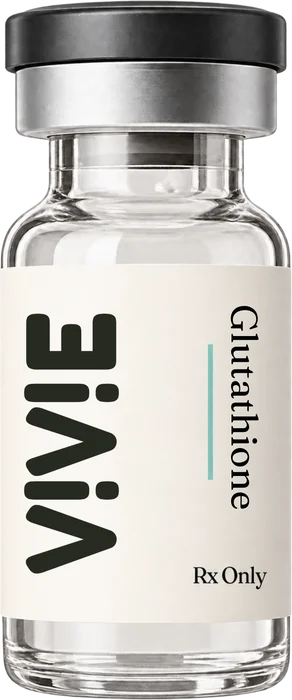
Explore GlutathioneThis article is for informational purposes only and does not constitute medical advice, diagnosis, or treatment. Evidence regarding glutathione supplementation and injectable glutathione varies depending on the formulation, route, and intended use. Prescription treatments require evaluation and approval by a licensed healthcare provider.