



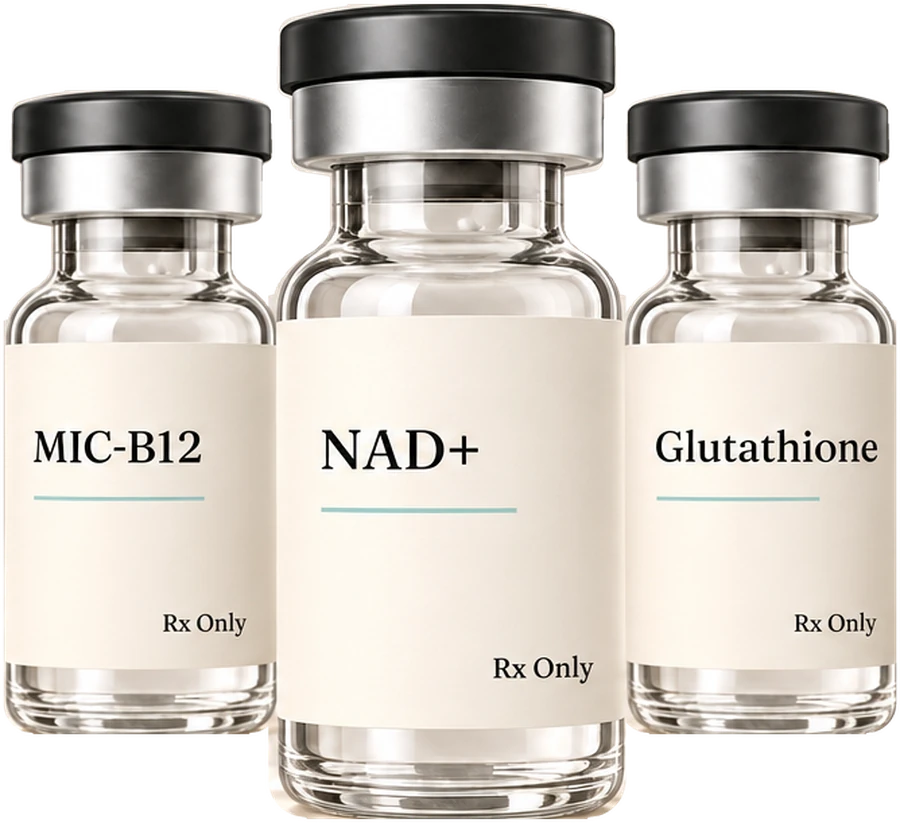

NAD+: Why This Molecule Matters to Cellular Health
What NAD+ does inside the body, why levels may change over time, and why it has become part of the conversation around healthy aging.

You may have seen NAD+ mentioned alongside longevity, cellular energy, metabolism, and healthy aging.
But NAD+ isn't a new wellness ingredient.
It's a molecule your body already makes—and your cells depend on it every day.
NAD+, short for nicotinamide adenine dinucleotide, is found throughout the body and plays an essential role in cellular metabolism. It helps cells convert nutrients into usable energy and also participates in processes involved in DNA repair, cellular signaling, mitochondrial function, and responses to stress.
That basic biology is one reason NAD+ has become such an active area of longevity research.
But what does NAD+ actually do? And what do we really know about its relationship with aging?
What is NAD+?
NAD+ is a coenzyme, which means it helps other enzymes carry out important chemical reactions in the body.
Every living cell requires it.
One of its best-known roles is helping the body turn carbohydrates, fats, and proteins into energy.
During cellular metabolism, NAD+ can accept electrons and become NADH. NADH can then help fuel processes within the mitochondria that contribute to the production of ATP—the form of energy cells can readily use.
Put simply:
Your cells use NAD+ as part of the machinery that helps turn what you eat into energy your body can use.
But energy metabolism is only part of the story.
NAD+ does more than support cellular energy
Researchers now understand that NAD+ also acts as a substrate for enzymes involved in several important cellular processes.
These include pathways related to:
- cellular metabolism
- mitochondrial function
- DNA repair
- cellular stress responses
- inflammation
- autophagy and mitophagy
- neuronal function
That broad role helps explain why NAD+ is being studied across areas ranging from metabolism and aging to neurological health.
It does not, however, mean that increasing NAD+ automatically improves all of these processes in humans.
That's an important distinction.
The biology is compelling, but research into the clinical benefits of increasing NAD+ is still developing.
What does NAD+ have to do with mitochondria?
Mitochondria are often described as the powerhouses of the cell because they help produce ATP.
NAD+ and NADH are deeply involved in this process.
Your body continually cycles between NAD+ and NADH as part of the reactions that help extract energy from nutrients.
Without adequate NAD metabolism, normal energy production would not function properly.
Researchers are also studying NAD+ because mitochondrial health is closely connected with many aspects of cellular aging. Recent reviews describe NAD+ as an important molecule in maintaining mitochondrial function and cellular homeostasis.
This is where NAD+ begins to overlap with the broader conversation around healthy aging and longevity.
Does NAD+ decline with age?
You've probably heard the claim that NAD+ levels fall dramatically as we get older.
The reality is a little more nuanced.
Animal research and several human studies suggest that NAD+ levels can decline with age in certain tissues, and altered NAD+ metabolism has been associated with aging and age-related conditions.
However, a 2025 review in Nature Metabolism found that evidence for a consistent age-related decline in NAD+ across human tissues remains limited.
Different tissues may behave differently, and researchers still don't fully understand how NAD+ metabolism changes throughout the human body over time.
So the most accurate answer is:
NAD+ appears to change with aging, but the pattern is more complex than “everyone loses NAD+ at the same rate.”
Why might NAD+ levels change?
NAD+ is constantly being created, recycled, and consumed.
Its availability depends on the balance between those processes.
As we age, researchers believe several factors may affect NAD+ metabolism, including changes in the enzymes that produce and consume NAD+, cellular stress, inflammation, mitochondrial function, and accumulated DNA damage.
This has led scientists to ask an obvious question:
If NAD+ availability changes with age, could increasing it support healthier aging?
That's where NAD+ research gets especially interesting—and where it's important not to get ahead of the evidence.
Can you increase NAD+?
The body can make NAD+ using several pathways.
Some begin with forms of vitamin B3, including:
- nicotinamide
- nicotinic acid
- nicotinamide riboside, or NR
- nicotinamide mononucleotide, or NMN
Because of this, researchers have studied NAD+ precursors such as NR and NMN as ways of increasing NAD+-related metabolites in the body.
Human studies have shown that some NAD+ precursors can increase NAD+-related biomarkers.
But increasing a biomarker doesn't automatically mean improving how someone feels or extending lifespan.
That's where the evidence becomes much less certain.
What does the research say about NAD+ and longevity?
In laboratory and animal research, increasing NAD+ availability has produced interesting findings related to metabolism, mitochondrial function, and several biological pathways associated with aging.
Those findings have helped drive the enormous interest around NAD+ and longevity.
But results from human studies have been much more mixed.
A 2025 review concluded that although NAD+ precursors can affect NAD+ metabolism, human clinical trials have so far demonstrated limited and inconsistent evidence of meaningful benefits for healthy aging.
A more recent systematic review similarly found that oral NR and NMN generally increased NAD-related biomarkers, while effects on physical function, metabolic outcomes, vascular health, and other measures associated with healthspan varied considerably between studies.
That's an important distinction.
What researchers know
NAD+ is essential to human biology.
It plays a central role in energy metabolism and multiple cellular pathways.
NAD+ metabolism appears to change with aging.
Researchers can manipulate NAD+ pathways in both laboratory models and humans.
What researchers are still figuring out
Whether increasing NAD+ meaningfully improves healthy aging in humans.
Which people might benefit.
What dose or route might be most appropriate.
Whether effects differ by tissue.
What the long-term benefits and risks may be.
And whether changing NAD+ levels translates into meaningful improvements in healthspan.
What about NAD+ injections and IV therapy?
You may also see NAD+ injections and NAD+ IV therapy discussed in longevity clinics.
These approaches are different from research on oral NAD+ precursors such as NR or NMN, and they should not automatically be treated as interchangeable.
Research examining injectable or intravenous NAD+ specifically for anti-aging and wellness remains much more limited than research on oral precursors.
A 2026 systematic review examining NAD+-boosting strategies noted that eligible clinical outcomes trials evaluating intravenous or intramuscular NAD+ itself for anti-aging or wellness were lacking.
That doesn't mean these approaches have no biological effect.
It means claims about specific wellness or longevity outcomes should be interpreted carefully.
NAD+ isn't a shortcut around healthy aging
Longevity conversations can sometimes make it seem as if discovering the right molecule is the key to aging well.
Human biology is rarely that simple.
NAD+ may be one interesting piece of a much larger picture.
Sleep.
Strength.
Movement.
Nutrition.
Metabolic health.
Hormones.
Cardiovascular health.
Mental health.
Social connection.
Preventive care.
All of these influence how we age.
No longevity treatment replaces those foundations.
And emerging therapies are most useful when they're discussed in context rather than presented as alternatives to them.
Why NAD+ is still worth paying attention to
The reason scientists continue studying NAD+ isn't because it has been proven to reverse aging.
It's because NAD+ sits at the intersection of several processes fundamental to how cells function.
Energy production.
Mitochondrial health.
DNA maintenance.
Cell signaling.
Metabolism.
Those connections make NAD+ scientifically interesting—and they may ultimately help researchers better understand how cellular health changes with age.
For now, the strongest approach is curiosity without overstatement.
NAD+ matters to cellular health. What increasing it can meaningfully accomplish for human longevity is still being defined.
And that's exactly why the research is worth following.
The VIVIE perspective
Healthy aging isn't about chasing every new longevity trend.
It's about understanding what is happening inside your body, separating promising science from promises, and making decisions with the right clinical context.
At VIVIE, prescription treatments are considered individually and require review by a licensed healthcare provider to determine whether a treatment is clinically appropriate.
Explore NAD+This article is for informational purposes only and does not constitute medical advice, diagnosis, or treatment. Research into NAD+-targeted therapies and healthy aging is ongoing. Prescription treatments require evaluation and approval by a licensed healthcare provider.