




What Is Sermorelin—and Why Is Growth Hormone Part of the Longevity Conversation?
A clear look at growth-hormone signaling, what sermorelin does, and why this pathway comes up in conversations about healthy aging.

Growth hormone probably isn't the first thing you think about when you hear the word longevity.
But as researchers study how the body changes with age, the growth hormone system—and the signals that regulate it—often become part of the conversation.
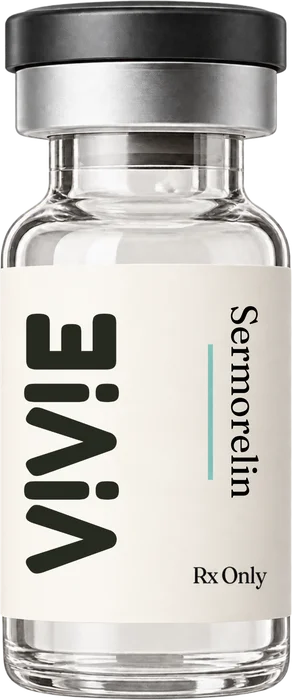
One of those signals is sermorelin.
Sermorelin is a synthetic version of part of growth hormone-releasing hormone, or GHRH, the natural hormone that tells the pituitary gland to release growth hormone.
That makes sermorelin different from taking growth hormone itself.
Instead of supplying growth hormone directly, sermorelin works higher up in the signaling pathway by stimulating the body's own pituitary response.
So why is that interesting in the context of aging?
It starts with understanding what growth hormone actually does.
What is growth hormone?
Growth hormone, often abbreviated GH, is produced by the pituitary gland.
Despite its name, growth hormone isn't only relevant during childhood.
In adults, the GH system is involved in processes related to:
- body composition
- protein metabolism
- fat metabolism
- bone turnover
- glucose regulation
- tissue growth and repair
Many of growth hormone's effects are mediated through another hormone called insulin-like growth factor 1, or IGF-1.
Together, GH and IGF-1 form what researchers often call the GH/IGF-1 axis.
And this system changes over time.
Does growth hormone decline with age?
Generally, yes.
Growth hormone secretion tends to decrease as people get older, and circulating IGF-1 levels often decline as well. This age-related change has historically been referred to as the somatopause.
That observation helped spark an important question:
Could some of the changes associated with aging be related to lower growth-hormone activity?
The idea isn't completely unreasonable.
Lower GH activity and aging can both be associated with changes such as reduced lean mass and increased body fat.
But similar patterns don't necessarily mean one is causing the other.
Normal age-related changes in GH signaling are not considered the same thing as medically diagnosed adult growth hormone deficiency.
That's a very important distinction.
So, what is sermorelin?
Sermorelin is a peptide modeled after the first 29 amino acids of human growth hormone-releasing hormone.
Those 29 amino acids contain the portion of GHRH needed to stimulate the pituitary gland.
When GHRH receptors in the pituitary are activated, they signal the gland to release growth hormone.
So sermorelin does not contain growth hormone.
Instead, it stimulates a physiological pathway involved in your body's own GH production.
Historically, an FDA-approved sermorelin product called Geref was approved for pediatric growth-hormone-related indications. FDA records show that the marketed product was later discontinued, and FDA has noted that no growth-hormone secretagogue is approved for treating growth hormone deficiency in adults.
That means the current conversation around sermorelin in adult wellness and longevity is different from its original approved use.
How is sermorelin different from growth hormone?
The difference is essentially signal versus hormone.
With recombinant human growth hormone, GH itself is administered directly.
With sermorelin, the pituitary receives a signal intended to encourage endogenous growth-hormone release.
That distinction has been of interest to researchers because natural GH secretion is pulsatile—it rises and falls rather than remaining at one constant level.
Growth-hormone-releasing hormones and secretagogues may preserve some of the body's own feedback mechanisms in ways that direct GH administration does not.
But that physiological distinction doesn't automatically mean sermorelin is safer, better, or proven to improve longevity.
Those are separate clinical questions.
Why does growth hormone come up in longevity conversations?
Because the GH/IGF-1 system is connected with several things that change as we age.
For example, aging is commonly associated with changes in:
- muscle mass
- fat distribution
- bone health
- exercise capacity
- recovery
- metabolic function
Growth hormone influences several of these systems, which made GH signaling an obvious target for aging research.
A 2025 clinical review described GH and IGF-1 as having important roles in body composition, metabolism, bone formation, and other physiological processes, while also emphasizing that the long-term safety and effectiveness of using this pathway to promote healthy aging remain uncertain.
In other words:
The pathway matters.
That does not mean increasing it automatically makes someone healthier or younger.
Does sermorelin increase growth hormone?
Sermorelin was designed specifically to stimulate growth hormone release.
Research on GHRH-based therapies has shown that stimulating this pathway can increase GH secretion and raise IGF-1 under certain conditions.
That's the biological effect that makes sermorelin interesting.
But from an aging perspective, another question matters more:
Does increasing GH signaling actually improve outcomes people care about?
Things like strength.
Energy.
Physical function.
Sleep.
Long-term health.
Independence.
Or lifespan.
That's where the evidence becomes much less straightforward.
What does the research say about growth hormone and aging?
Studies of growth hormone in older adults have shown some measurable effects on body composition.
A systematic review of randomized trials found that GH treatment in healthy older adults increased lean body mass and reduced fat mass modestly.
But it also increased adverse effects including swelling, joint pain, carpal tunnel syndrome, and disturbances in glucose metabolism.
Importantly, changes in body composition don't necessarily translate into improvements in strength, physical function, quality of life, or longevity.
More recent clinical reviews continue to describe the evidence as mixed, with insufficient long-term data on outcomes such as cardiovascular disease, cancer, fractures, lifespan, and mortality.
For that reason, growth hormone is not recommended as a general anti-aging therapy for healthy adults.
Is research on sermorelin the same as research on growth hormone?
No.
This is an important point.
Sermorelin, direct growth hormone, and other growth hormone secretagogues all interact with the GH axis, but they're not interchangeable.
Their pharmacology is different.
Their dosing is different.
And the amount of clinical evidence supporting each approach is different.
Older studies of GHRH treatment found increases in IGF-1 and lean body mass in some participants, but effects on physical performance were inconsistent. Researchers concluded that the evidence did not support routine use of GHRH or GH secretagogues for normal aging.
So when someone says a study on growth hormone “proves” a benefit of sermorelin—or vice versa—that conclusion may be too broad.
Does sermorelin build muscle?
This is one of the most common reasons sermorelin enters wellness discussions.
Because GH and IGF-1 influence protein metabolism and body composition, stimulating this pathway has been studied for its effects on lean mass.
Some GH- or GHRH-based studies have demonstrated increases in lean body mass.
But more lean mass does not automatically mean more strength.
Clinical trials of GH-related interventions in older adults have not consistently shown corresponding improvements in physical function.
That distinction matters if you're evaluating claims such as:
“builds muscle”
“restores strength”
or
“reverses age-related muscle loss.”
The evidence is much more nuanced than those statements suggest.
What about body fat and metabolism?
The GH system also influences fat metabolism.
Studies administering GH to older adults have shown modest reductions in fat mass, which is another reason the pathway has attracted attention in metabolic and longevity medicine.
But GH signaling also interacts with glucose metabolism.
Higher growth-hormone activity can reduce insulin sensitivity in certain circumstances, and GH treatment in older adults has been associated with elevated blood glucose and impaired glucose regulation.
So the metabolic conversation isn't simply:
more GH = better metabolism.
Endocrine systems work through balance.
More isn't always better.
What about sermorelin and sleep?
Growth hormone naturally follows a rhythm.
A substantial amount of GH secretion occurs in pulses, particularly around deep sleep.
This relationship has led to interest in whether modifying GH signaling could influence sleep or recovery.
However, research with GHRH in older adults has not produced consistent evidence that stimulating this pathway reliably improves sleep. One review noted that chronic short-acting GHRH treatment did not improve sleep in the studies evaluated.
Sleep and GH are biologically connected.
That doesn't mean sermorelin should be considered a proven sleep treatment.
Is sermorelin an anti-aging treatment?
“Anti-aging” is probably the wrong way to think about it.
Growth-hormone signaling is unquestionably related to human physiology and changes with age.
But normal aging involves far more than one hormone pathway.
In fact, researchers continue to debate whether lower GH/IGF-1 signaling with age is entirely harmful or whether some of that decline could represent an adaptive response.
The biology of longevity is complicated.
More growth signaling isn't automatically better.
And less isn't automatically better either.
That's why the scientific conversation is about understanding the pathway—not simply trying to restore hormone levels to those seen in younger adults.
What should you know before considering sermorelin?
Sermorelin is a prescription peptide that affects an important endocrine pathway.
It shouldn't be approached like a general wellness supplement.
A healthcare provider considering treatment may need to evaluate factors such as:
- symptoms
- medical history
- medications
- metabolic health
- glucose regulation
- hormone-related conditions
- individual risk factors
- treatment goals
The bigger question isn't simply:
“Can sermorelin raise growth hormone?”
It can stimulate GH release.
The more useful question is:
“Would modifying this pathway be clinically appropriate for this particular person?”
That's a much more individualized decision.
Why is sermorelin still part of the longevity conversation?
Because growth hormone is connected to several systems that matter as we age.
Muscle.
Bone.
Body composition.
Metabolism.
Recovery.
Cellular growth.
And researchers still have important questions about how changes in GH and IGF-1 influence health across the lifespan.
Sermorelin gives clinicians and researchers another way of interacting with that pathway.
But interest isn't the same as proof.
Sermorelin can stimulate growth-hormone signaling. Whether doing so produces meaningful healthy-aging benefits for an individual depends on far more than raising a hormone level.
That's the part worth understanding.
The VIVIE perspective
Longevity shouldn't be about trying to push every biomarker back to what it looked like at 25.
It's about understanding how your body is changing, which changes actually matter, and where treatment may—or may not—make sense.
At VIVIE, prescription treatments are considered individually and require evaluation by a licensed healthcare provider to determine whether a treatment is clinically appropriate.
Explore SermorelinThis article is for informational purposes only and does not constitute medical advice, diagnosis, or treatment. Sermorelin is not FDA-approved for anti-aging or longevity purposes. Prescription treatment requires evaluation and approval by a licensed healthcare provider.