



What Does Healthy Aging Actually Mean?
Healthy aging isn’t about trying to stay the same. It’s about understanding what changes with time—and what you can support along the way.

For a long time, the conversation around aging—especially for women—has focused on what we can see.
Fine lines. Gray hair. Changes in our skin or body.
But healthy aging for women goes much deeper than appearance.
It’s about how you sleep. How strong you feel. Your energy throughout the day. Your metabolic health. Your hormones. Your sexual health. Your ability to move, think, work, connect, and continue doing the things that make you feel like yourself.
And while aging is inevitable, the way we experience it isn't determined by age alone.
Healthy aging isn't the same as anti-aging
There’s an important distinction.
Healthy aging isn't about stopping the clock or trying to recreate the body you had at 25.
The World Health Organization defines healthy aging around maintaining the abilities that support well-being as we get older—not simply the absence of disease.
That changes the question from:
“How do I stop aging?”
to:
“How can I support my health as my body changes?”
That might mean maintaining strength.
Supporting cardiovascular and metabolic health.
Protecting sleep.
Understanding hormonal changes.
Taking care of your mental and sexual health.
Or simply having enough energy to keep doing the things that matter to you.
Longevity isn't only about adding years to your life. It's also about supporting the quality of those years.
Your body changes. That doesn't mean you stop paying attention to it.
Aging is not one single biological event.
Different systems throughout the body change at different times and at different rates.
And for women, the transition through the 30s, 40s, 50s and beyond can also overlap with significant hormonal changes.
Estrogen and progesterone fluctuate during perimenopause and ultimately decline with menopause. These hormones are involved in more than the menstrual cycle, and hormonal changes may occur alongside changes in sleep, body composition, temperature regulation, vaginal health and other aspects of well-being.
That doesn't mean every symptom you experience should automatically be blamed on your age or hormones.
It means changes deserve context.
Understanding what's happening can make it easier to recognize what may be expected, what may be modifiable, and what deserves a conversation with a healthcare provider.
Healthy aging starts much earlier than you might think
You don't suddenly begin aging at 50.
Aging is happening throughout life.
The habits, health conditions and environments we experience earlier can influence our health later on—which is why thinking about women's health after 40 shouldn't only begin after something feels wrong.
In fact, many of the most useful healthy-aging strategies are surprisingly unglamorous.
Regular movement.
Strength.
Sleep.
Nutrition.
Preventive healthcare.
Social connection.
Managing chronic health conditions.
And paying attention when your body begins behaving differently.
Research summarized by the National Institute on Aging identifies physical activity, nutritious eating, adequate sleep, regular healthcare and mental-health support among the factors that can contribute to healthier aging.
There isn't one supplement, injection, routine or treatment that replaces those foundations.
Muscle matters more as you age
Strength isn't only about how your body looks.
Muscle supports movement, balance, metabolic health and your ability to remain active and independent over time.
That's one reason resistance training becomes increasingly relevant as we get older.
You don't need to become a bodybuilder.
Walking, resistance exercises, carrying weight, Pilates, yoga and other forms of movement can all have a place depending on your health, preferences and abilities.
The important part is continuing to use your body.
Regular physical activity is one of the most consistently supported components of healthy aging, with benefits extending beyond weight alone.
Your metabolism may feel different, too
If it feels like your body responds differently to food, exercise or sleep than it did ten years ago, you're not necessarily imagining it.
Body composition, activity levels, sleep, hormones, medications and underlying health conditions can all affect metabolic health.
For women moving through midlife, several of these factors can happen at once.
That makes metabolic health for women a more useful conversation than simply focusing on a number on the scale.
Blood sugar, blood pressure, cholesterol, muscle mass, nutrition, activity and other markers can all provide a fuller picture of health.
Instead of asking only:
“How do I lose weight?”
it may be more useful to ask:
“What is changing metabolically—and what can I support?”
Sleep is part of longevity, too
Sleep often gets treated like the first thing we can sacrifice when life gets busy.
Your body may disagree.
Sleep supports both physical and mental health, and persistent sleep problems can affect how you feel and function during the day. The National Institute on Aging recommends habits such as maintaining a regular sleep schedule and staying physically active as part of supporting better sleep.
For women, sleep can also become more complicated during periods of hormonal change.
Night sweats, hot flashes, stress, changing routines and other health factors may all interfere.
The answer isn't always simply “get eight hours.”
Sometimes the first step is understanding why sleep has changed.
Healthy aging includes your sexual health
Sexual health does not expire at a certain age.
Yet it is often left out of conversations about women's longevity.
Hormonal and physical changes can affect vaginal comfort, arousal, desire and sexual function. Relationships, stress, medications, sleep and mental health can matter too.
And these changes aren't something women simply have to stop talking about as they get older.
Sexual well-being is part of overall well-being.
If something has changed enough to bother you, it's worth discussing with a qualified healthcare provider rather than assuming it's just something you need to accept.
And yes, your skin changes
Skin is one of the places where aging becomes most visible, so naturally it gets a lot of attention.
But healthy skin aging isn't about making your face look permanently 25.
Skin changes over time as its structure, hydration and ability to recover change. Hormonal changes can also influence how skin looks and feels.
Sun protection, consistent skincare and general health habits remain important.
Treatments and ingredients may have a place too—but a realistic approach to skin longevity focuses on supporting skin health rather than chasing an impossible promise to stop aging altogether.
What about NAD+, peptides and other longevity treatments?
This is where the conversation around longevity gets more complicated.
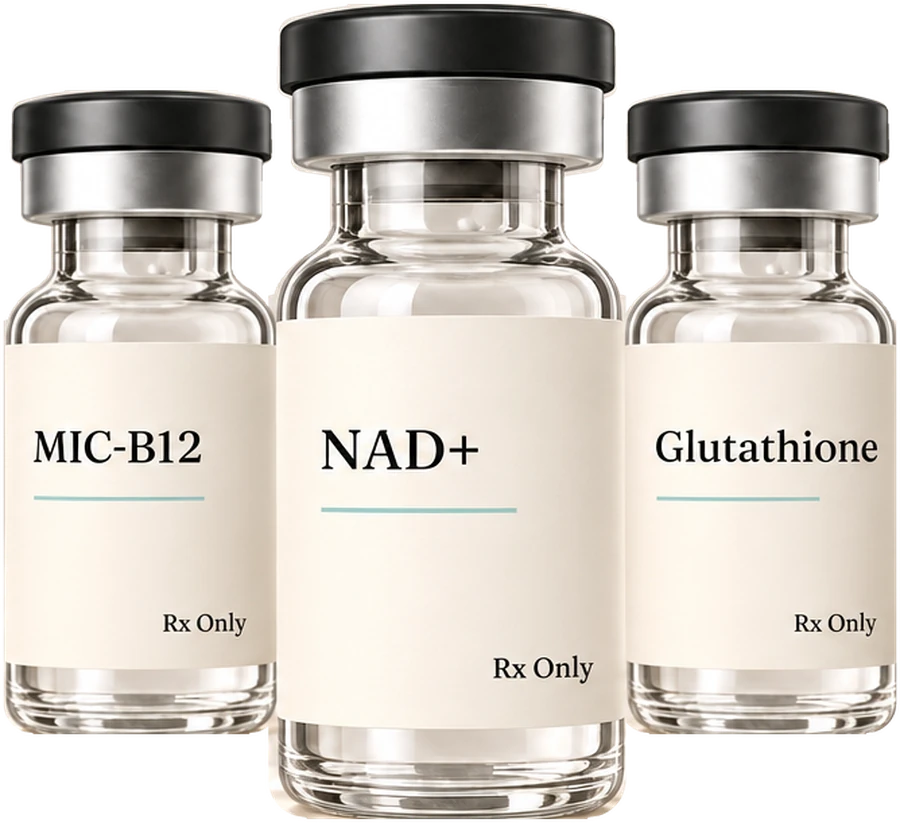
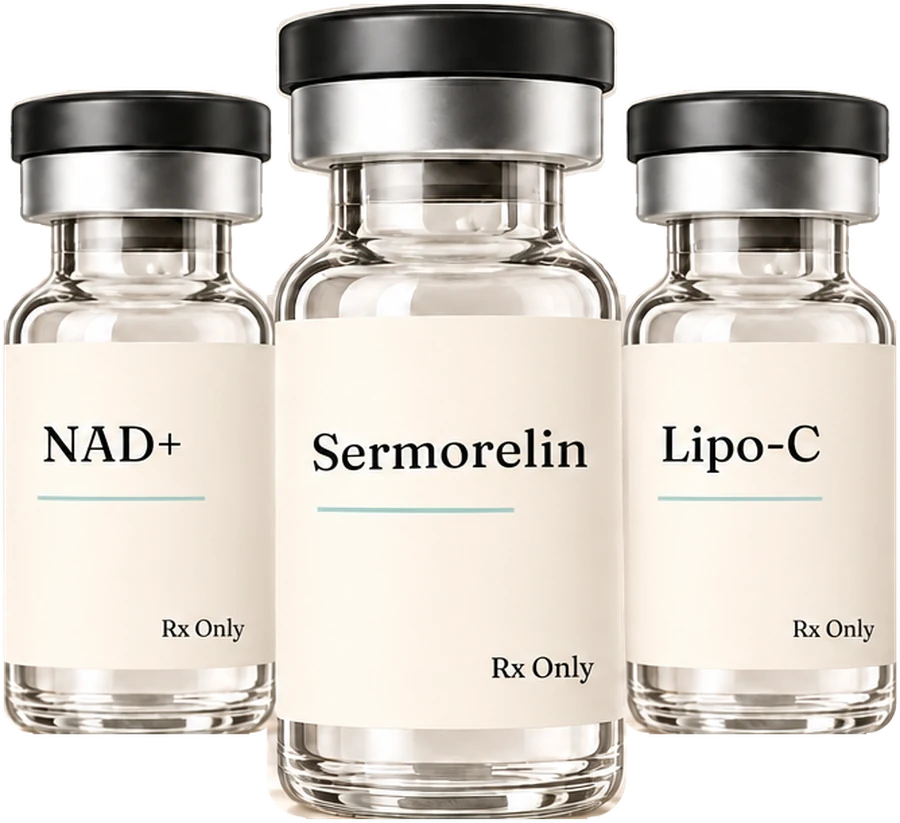
You may have heard about NAD+, peptides, antioxidants such as glutathione and other treatments being discussed in connection with healthy aging.
Some are based on real biological pathways that researchers are actively studying.
But biological plausibility isn't the same thing as proven clinical benefit.
The evidence varies substantially depending on the specific compound, formulation, route of administration and intended use.
That's why treatments associated with longevity shouldn't replace the fundamentals of health—and why prescription options should be considered individually with a licensed healthcare provider.
At VIVIE, we believe being interested in emerging wellness options and being thoughtful about the evidence can exist at the same time.
You deserve both curiosity and context.

So, what does healthy aging actually look like?
There isn't one version.
For one woman, it may mean having enough energy to run her business and still enjoy her evening.
For another, it may mean getting stronger after years of not exercising.
It might mean finally addressing menopause symptoms.
Sleeping through the night.
Feeling comfortable in your body again.
Improving metabolic health.
Protecting bone and muscle.
Taking sexual health seriously.
Or simply understanding why you're feeling different.
Healthy aging isn't about becoming a younger version of yourself.
It's about supporting the version of you that's here now—and the one you're becoming.
Start with understanding your body
Your needs can change with time. Your care can change with them.
VIVIE connects you with licensed healthcare providers who can review your health information, discuss your goals and determine whether available prescription treatment options may be clinically appropriate for you.
Explore Well AgingThis article is for informational purposes only and is not a substitute for professional medical advice, diagnosis or treatment. Prescription treatments require evaluation and approval by a licensed healthcare provider.